Flood coverage
Give flood its own conversation.
A valuable home can have flood needs that differ from its homeowners coverage. Review the property, the limits, and the policy details together.
Address flood separately
Standard homeowners policies generally exclude flood damage. A high dwelling limit does not change that exclusion by itself. Review a separate flood policy or a specific flood endorsement when one is available, and compare what it actually covers.
Look at the limit and the settlement terms
For a typical one-to-four-family residential building, the National Flood Insurance Program offers up to $250,000 of building coverage and up to $100,000 for contents. Those maximums can leave a substantial difference compared with the reconstruction cost of a high-value home. Private primary flood or excess flood coverage may provide another approach, subject to eligibility and the policy offered.
Ask how an excess policy sits above the underlying coverage. Confirm its attachment point, required underlying insurance, exclusions, and claim settlement provisions. Do not assume every excess product accepts every underlying policy.
Questions for a high-value property
- Does the building limit reflect the exposure you want to insure?
- How are the home and contents valued after a covered loss?
- Are finished lower levels, detached structures, pools, landscaping, or outdoor property limited or excluded?
- Is temporary housing covered? NFIP coverage does not include additional living expenses.
- Which deductible applies, and does contents coverage have a separate deductible?
- When can the policy take effect, and does a waiting period apply?
- Does the proposed policy satisfy the lender’s requirements?
Coastal and inland homes both deserve a review
Begin with the address, available elevation information, prior water events, and the parts of the home that could be affected. A flood-zone designation is one input, not a full inventory of the property’s exposure. Mention substantial improvements, basement finishes, and any proposed changes before requesting terms.
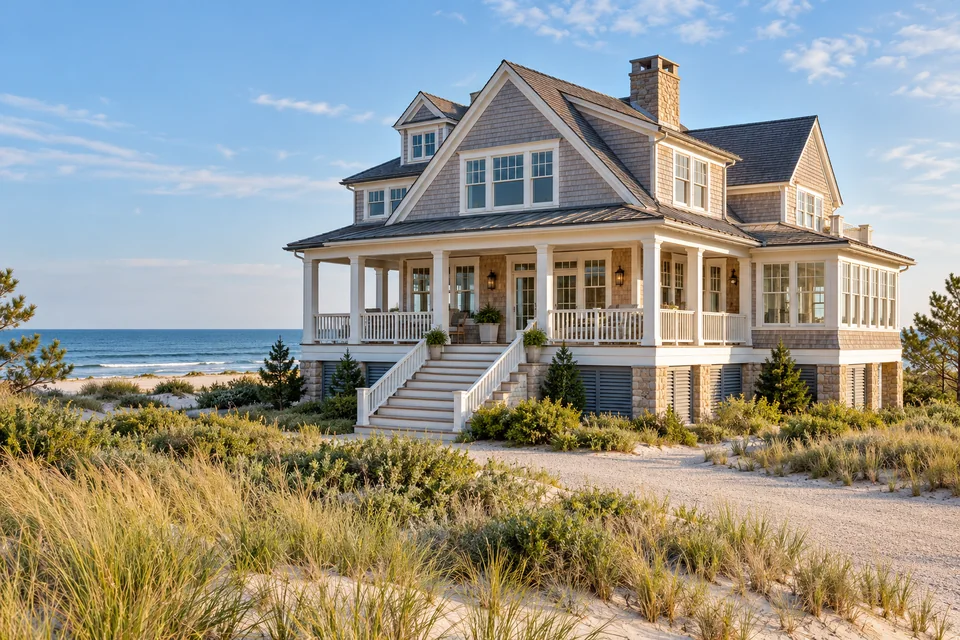
For a coastal residence, review how flood and wind policies work alongside one another. Our coastal home guide explains the questions to organize before comparing options.
Prepare for the conversation
Gather the current flood policy if one exists, the property address, photographs or plans of lower levels, any elevation certificate already available, and the requested effective date. Do not purchase an elevation certificate solely on an assumption that every market requires it. Ask what the specific option needs first.
Request a quoteSeparate flood from other water questions
A plumbing leak, sewer backup, and flood are not interchangeable descriptions. Our water damage guide helps organize those distinctions. For a property used only part of the year, also review seasonal occupancy and time away.