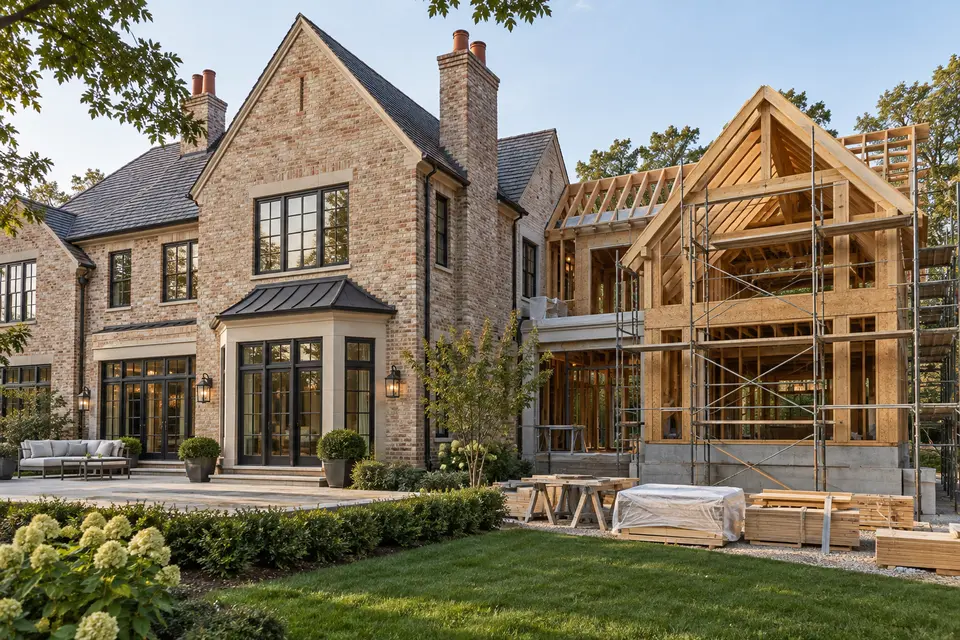
Describe the project before choosing the policy
Tell your insurance specialist what will change, when work starts, and whether you will stay in the home. A cosmetic update and a project involving structural work, roof removal, or an uninhabitable building require different questions. Include the estimated budget, contractor, anticipated completion date, and any phased work. Ask for written confirmation of the insurance arrangement before relying on the existing policy.
Distinguish the current structure from the planned improvements. For a historic home with original materials, identify features that will remain, materials being restored off-site, and reproduction work. For a coastal project, discuss weather exposure alongside your wind and flood arrangements. An accurate project description is more useful than calling everything a remodel.
Separate construction property coverage from liability
Builder's risk, also called course-of-construction insurance, is property coverage for a construction project. Depending on the policy, it may address damage to the work and theft of building materials. It may be offered separately or through an endorsement. It should not be treated as a substitute for contractor liability insurance or workers' compensation.
Use the proposal to answer specific questions: Is the existing building included, or only the new work? What happens to materials awaiting installation? Are off-site storage and transit addressed? Which causes of loss are excluded? Who is insured, who buys the policy, and who handles a claim? Ask about deductibles, reporting obligations, project delays, and the event that ends construction coverage. Do not assume a contractor's promise to be insured answers these questions.
Explain any move-out and protect belongings separately
Moving out during construction can change the occupancy facts on which your homeowners coverage depends. The NAIC warns that vacant or unoccupied homes can have exposures outside ordinary homeowners protection. Describe the actual situation: furniture remaining, utilities operating, overnight occupancy, and how often someone checks the property. Let the insurer apply its definitions rather than selecting a label yourself.
If this is also a seasonal or second home, disclose both patterns of use. Ask how household property is covered when it is packed, moved, or stored elsewhere. For valuable art, instruments, antiques, or collections, review the relevant valuables coverage before relocation. Planned accommodation during an elective remodel is not something to assume the policy will fund; additional living expense coverage generally responds to qualifying covered-loss circumstances.
Know what the contractor's insurance does not establish
Request insurance information for the general contractor and relevant subcontractors before work begins. Discuss liability and workers' compensation with your specialist, and have the appropriate adviser review insurance obligations in the construction contract. Ask what documentation confirms any protection intended for you. A statement that someone is insured does not establish that your particular loss would be covered.
Insurance against physical damage is also different from protection against a contractor failing to complete the agreement. The Texas Department of Insurance explains that performance and payment bonds address specified contractual obligations, subject to their terms and limits. If completion risk concerns you, ask whether a bond is appropriate for the project. It is a separate discussion, not an assumed feature of builder's risk insurance.
Track changes and arrange the handoff to completed-home coverage
Keep dated photographs, plans, material specifications, and approved change orders together. Tell your specialist when the scope, budget, completion date, or occupancy changes. A useful project checkpoint is simply: what is different from the description the insurer received? Send that update before a change creates uncertainty.
As completion approaches, review the estimated cost to rebuild the finished home. The purchase price and contractor's invoice are not automatically the correct dwelling limit. Update the description of rooms, custom finishes, systems, and detached structures. Add newly purchased belongings to your inventory, and coordinate when construction protection ends and the completed-home arrangement takes effect. Ask for the dates and conditions in writing.
Request a review of your renovation insurance with the project stage, property state, estimated reconstruction cost, and start date. You do not need final architectural plans to begin the conversation. Availability and terms depend on the project, property, and underwriting.
Common questions
Do all home renovations need builder's risk insurance?
No single rule fits every project. Some work may be acceptable under an existing homeowners arrangement, while substantial construction may need different protection. Describe the project before it starts and ask for confirmation of what applies.
Does the contractor's policy automatically protect my home?
Do not assume it does. A contractor's liability policy and property insurance for your building serve different purposes. Ask who insures the existing home, new work, and materials before work begins.
What if construction has already started?
Start the review now and describe the current condition accurately. Include completed work, remaining work, any damage, and the existing insurance. Options depend on those facts, and a new policy should not be assumed to cover an earlier loss.
Can we move out without changing our insurance?
That depends on your policy and the circumstances. Tell the insurer how long you expect to be away and whether the house will remain furnished and habitable. Ask how its occupancy provisions apply during the work.
Will homeowners insurance pay for our renovation rental?
Do not budget on that assumption. Additional living expense coverage generally applies when covered damage makes the home uninhabitable, subject to conditions and limits. A planned remodel without a covered loss is a different situation.
What should I send for an initial quote review?
Start with the property state, current project stage, estimated budget, and dates. Include your current insurance information and whether anyone lives in the home. Plans and detailed specifications can follow if they are needed.